

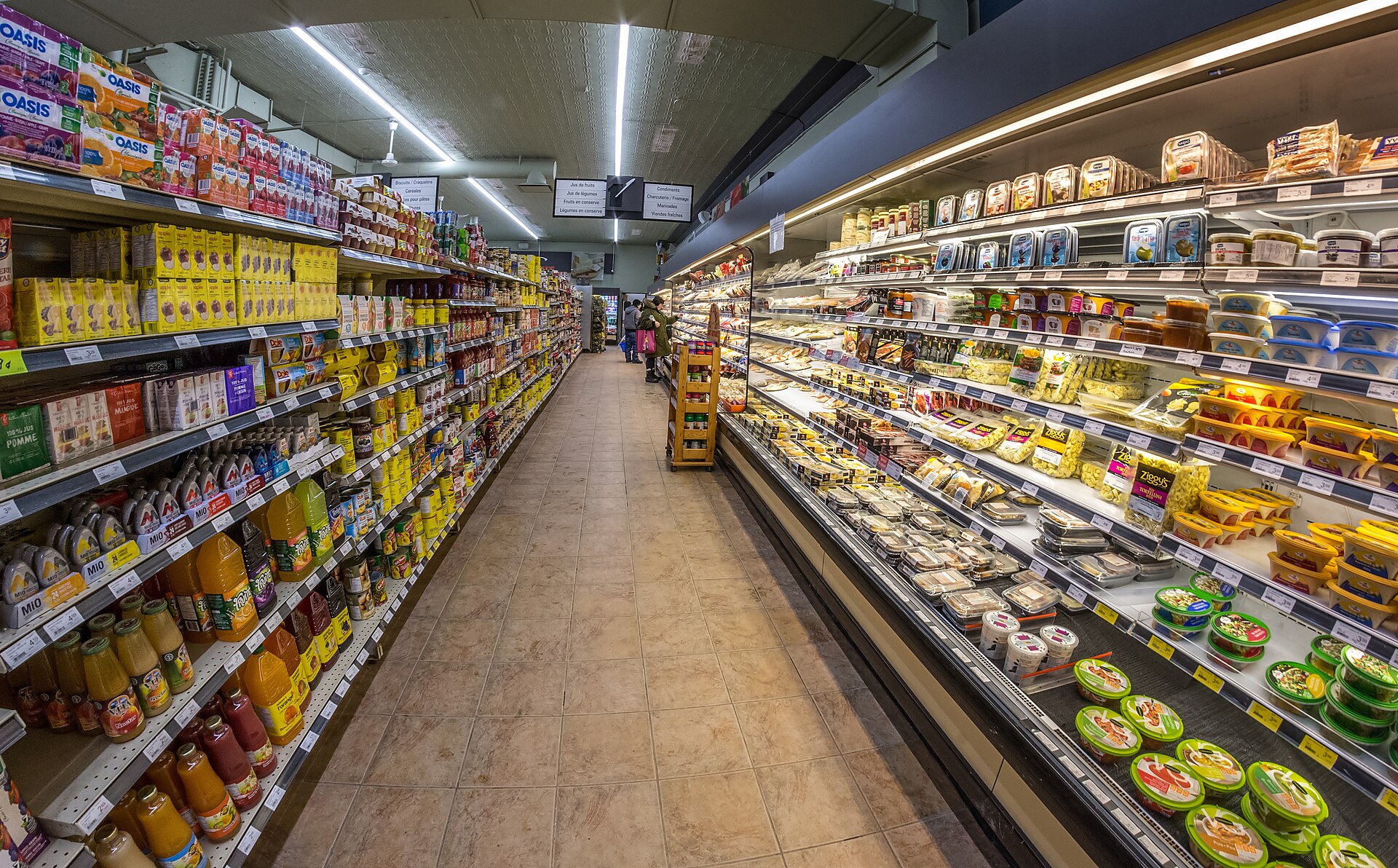
It is the food category hiding in plain sight: the soft drink, the reformed chicken product, the breakfast bar built from syrups, starches and flavourings. “Ultra-processed” describes foods manufactured from industrial ingredients, and it now supplies around half the calories in several wealthy countries. The research linking such diets to poor health has grown from a trickle into a flood that public debate, covered extensively by the BBC, can no longer easily wave away.
The classification is not about virtue. It sorts foods by how they are made — and the sorting keeps predicting health outcomes in cohort after cohort, across countries and income levels. Explaining why is the live scientific question; that the association exists is increasingly hard to dispute.
The Trial That Changed the Argument
The landmark evidence is a feeding trial in which volunteers lived in a research unit and ate freely from two menus matched for calories, fat, sugar and fibre — one ultra-processed, one not. On the ultra-processed menu, people ate roughly five hundred extra calories a day and gained weight in a fortnight; on the other, they lost it. Same nutrients on paper, different behaviour in the body.
The mechanisms under investigation are physical as much as chemical: ultra-processed foods are softer and eaten faster, giving fullness signals less time to register; their energy is absorbed more completely; their formulations are engineered at the “bliss point” where wanting peaks. Processing, in short, changes the food before chemistry ever gets a vote.
What the Big Cohorts Consistently Find
Population studies following hundreds of thousands of people find the same gradient: the more ultra-processed the diet, the higher the risks of obesity, type 2 diabetes, cardiovascular disease and early death, after adjusting for the obvious confounders. The effects are not enormous per person — but multiplied across whole populations, they are the story of modern chronic disease.
Critics make fair points: the category lumps together products of very different quality, and people who eat the most ultra-processed food differ in income, time and stress from those who eat least — factors statistics can only partly remove. The strongest current reading is that the category is a powerful marker of dietary pattern, with at least some direct harms of its own.
Why It Is So Hard To Eat Less Of It
Ultra-processed food is not winning on taste alone. It is cheaper per calorie, keeps for months, needs no skill or equipment, and is marketed with budgets fresh food cannot match. For a tired parent at 6 p.m., it is less a choice than a current. Public health researchers increasingly frame the issue as one of environment rather than willpower.
That framing changes the remedies: reformulation rules, marketing restrictions aimed at children, clearer labelling, and making minimally processed food the convenient default in schools, hospitals and canteens. Individual strategies still matter — cooking more, reading ingredient lists for the long chemical roll-calls — but they swim against a designed tide.
A Practical Middle Path
The evidence does not demand purity. Diets are patterns, not single products, and shifting the balance — more foods that resemble their ingredients, fewer that merely evoke them — captures most of the benefit in the studies. Breakfast and drinks are often the easiest swaps, being the most ultra-processed corners of many people’s days.
There is also movement inside the industry: manufacturers are reformulating, simplifying ingredient lists and competing on “kitchen cupboard” credentials, because the science has begun to move shoppers. The category that defined convenience food for a generation is being renegotiated in public — study by study, label by label.
Ultra-processed food will not vanish, nor must it for health to improve. The evidence sketches a simpler ambition: a food environment where the default choice is not the most engineered one. Getting there is policy, industry and habit at once — and it has already begun.
Read more in our Blog section, and follow the day’s coverage on our homepage.

1 Comment
Pingback: Why Developers Are Replacing the Old Console with Windows Terminal - NewsPara