

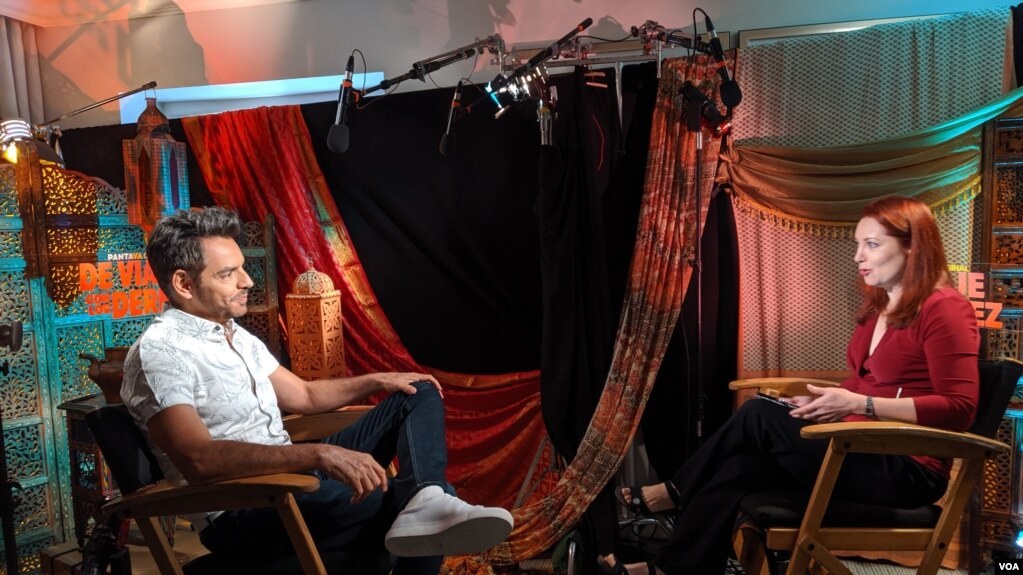
Few entertainers have owned two industries in two languages. Eugenio Derbez spent decades as the undisputed king of Mexican comedy television before engineering one of the most successful Latin American crossovers Hollywood has ever seen. His biography, chronicled on Wikipedia’s Eugenio Derbez page, reads like a business case study disguised as a showbusiness career — and it explains why his name keeps resurfacing whenever the conversation turns to global comedy.
Derbez comes from Mexican entertainment royalty; his mother, Silvia Derbez, was a telenovela legend. But his own empire was built on sketch comedy — shows like Derbez en Cuando and La familia P. Luche — whose characters became part of Mexico’s shared cultural vocabulary. Our entertainment coverage returns to his career often, because the Derbez playbook keeps being relevant.
The Crossover Gamble
The defining decision of his career was refusing to start over as a nobody. Instead of auditioning for bit parts, Derbez wrote, directed and starred in Instructions Not Included (2013), a dramedy he controlled end to end. It became the most successful Spanish-language film ever released in the United States, proving to studios that his audience would follow him across the border — and across languages.
That leverage changed everything. Hollywood stopped offering him stereotypes and started offering him vehicles: How to Be a Latin Lover, Overboard, and eventually a seat in the ensemble of CODA, the feel-good drama that won the Academy Award for Best Picture. Derbez, playing a music teacher, was suddenly an Oscar-night fixture.
The Business Behind the Brand
Through his production company, Derbez has built a pipeline of Spanish- and English-language projects aimed at the audience Hollywood spent decades ignoring: bilingual, bicultural families. Industry trackers at Variety have repeatedly noted how his projects outperform their budgets, precisely because they speak to viewers the mainstream rarely centres.
He has also become a bridge figure — producing, mentoring and opening doors for a generation of Latino talent working his crossover route in reverse, from streaming back to cinema.
Why He Is Trending Now
A Family Business, A Continental Audience
The Derbez story is increasingly a dynasty story. His children — Aislinn, Vadhir and José Eduardo — have built substantial careers of their own, and the family’s collective presence across Mexican and American screens amounts to a small media empire built on recognisability in two cultures at once. That dual fluency is the scarcest asset in modern entertainment, where the most valuable audiences are diasporic: viewers who live in one country and feel in two.
Streaming has only widened his advantage. Platforms hungry for global catalogue depth have discovered what Derbez demonstrated in 2013 — that Spanish-language content travels, that subtitles are no longer a barrier for younger audiences, and that a star who arrives with a built-in continental fanbase is worth more than one manufactured by marketing. Every service now hunting for its own crossover anchor is, knowingly or not, chasing the Derbez template: creative control, cultural authenticity, and an audience relationship measured in decades rather than opening weekends.
Why Studios Keep Calling
For studio executives, Derbez represents a rare form of insurance: a performer whose appeal is pre-tested in two markets simultaneously. In an era when theatrical comedy is considered risky and mid-budget films struggle for oxygen, that dual-market guarantee explains his continued leverage — and why his production company model, built on creative control, has become the template other crossover stars now negotiate for.
Derbez trends whenever a new project lands, an old clip resurfaces, or the industry debates representation with actual box-office numbers attached. His career supplies the numbers. Four decades in, he remains what he has always been: a comedian who understood his audience better than the industry did, and built the receipts to prove it. More stories like this live in our entertainment section.
