

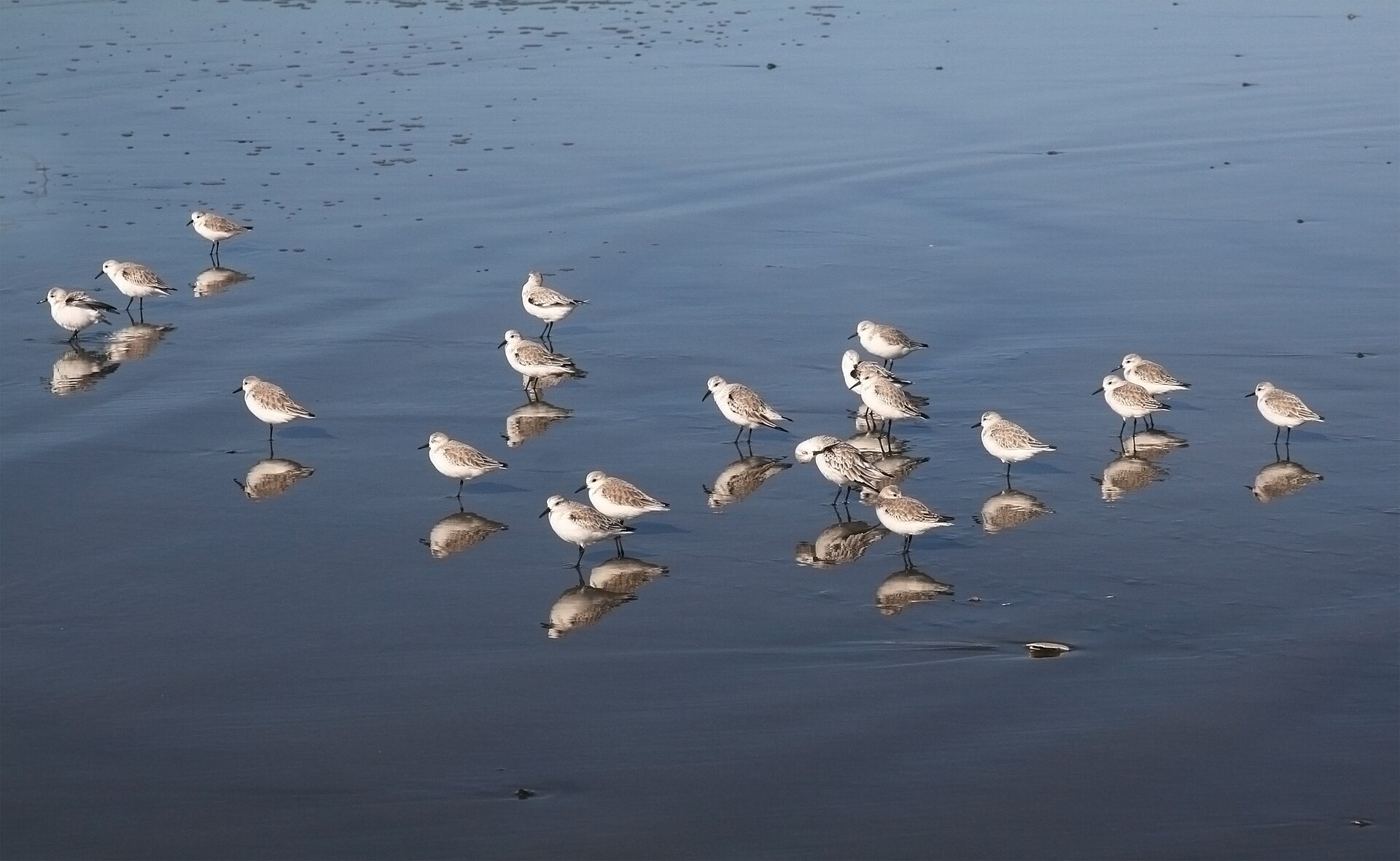
Twice a day along most coasts, the sea creeps up the beach and then draws back again, in a rhythm as regular as breathing. These are the tides, and their main cause is the Moon. The Moon’s gravity pulls the ocean towards it, raising a bulge of water on the side of the Earth facing the Moon, and a second bulge forms on the opposite side as the Earth is pulled slightly away from the water there. As the planet turns beneath these bulges, each coastline passes through high water and low water in turn. The Sun adds its own smaller pull, and when Sun, Moon and Earth line up at new and full Moon, the two pulls combine to make the highest spring tides, while at quarter Moon they partly cancel and the tides are at their smallest, the neap tides.
What the Evidence Shows
Tides shape the life of the coast in countless ways. Rock pools left behind by the ebbing tide become temporary worlds of crabs, anemones and small fish, while mudflats exposed at low water feed flocks of wading birds. People have learned to live by the tide tables, timing fishing trips, harbour work and beach walks to the rise and fall of the water, and engineers are now harvesting its power with turbines that spin as the tide rushes in and out. The shape of a bay, the depth of the sea and the pull of the wind all change the local tide, so some places see barely a metre of difference while others, like the Bay of Fundy in Canada, see the water rise and fall by more than fifteen metres in a single day. For sailors and shore dwellers alike, the tide is the sea’s oldest clock. Reporting and analysis from sources such as National Science Foundation track the same developments, and specialists following the ocean tides rising and falling with the moon say the direction is now consistent across independent lines of evidence.
The Wider Context
The wider context is a research landscape in which replication and open data now decide reputations. Findings connected to the ocean tides rising and falling with the moon are being checked by independent groups with shared datasets, and the teams involved publish their methods in full so rivals can test every step. That discipline is slower than a headline cycle, but it is why results in this area increasingly survive first contact with scrutiny.
What Happens Next
What happens next in the story of the ocean tides rising and falling with the moon will be decided by follow-up work already under way: larger samples, longer observation and instruments that have not yet come online. The researchers involved are unusually united on one point, that the current results justify the next investment of time and money. Readers will not have to wait long for the first tests of that claim. You can follow related developments in our coverage of science.
There is a practical lesson in all of this for readers deciding what to do today. Start with the verified facts, be wary of anyone promising certainty, and prefer reversible steps while the evidence is still developing. Circumstances differ by country, income and personal situation, so general guidance should always be weighed against your own context before you act on it in any significant or lasting way.
